
How does AI wildfire detection work?
The principle is early detection of smoke over a wide area, continuously, without relying on someone happening to look in the right direction.
Why early detection matters?
On large landholdings — plantations, forestry concessions, peat areas, remote industrial sites — the practical difficulty is not fighting a fire but noticing it early enough that the response is still manageable. Detection time dominates outcome.
The components
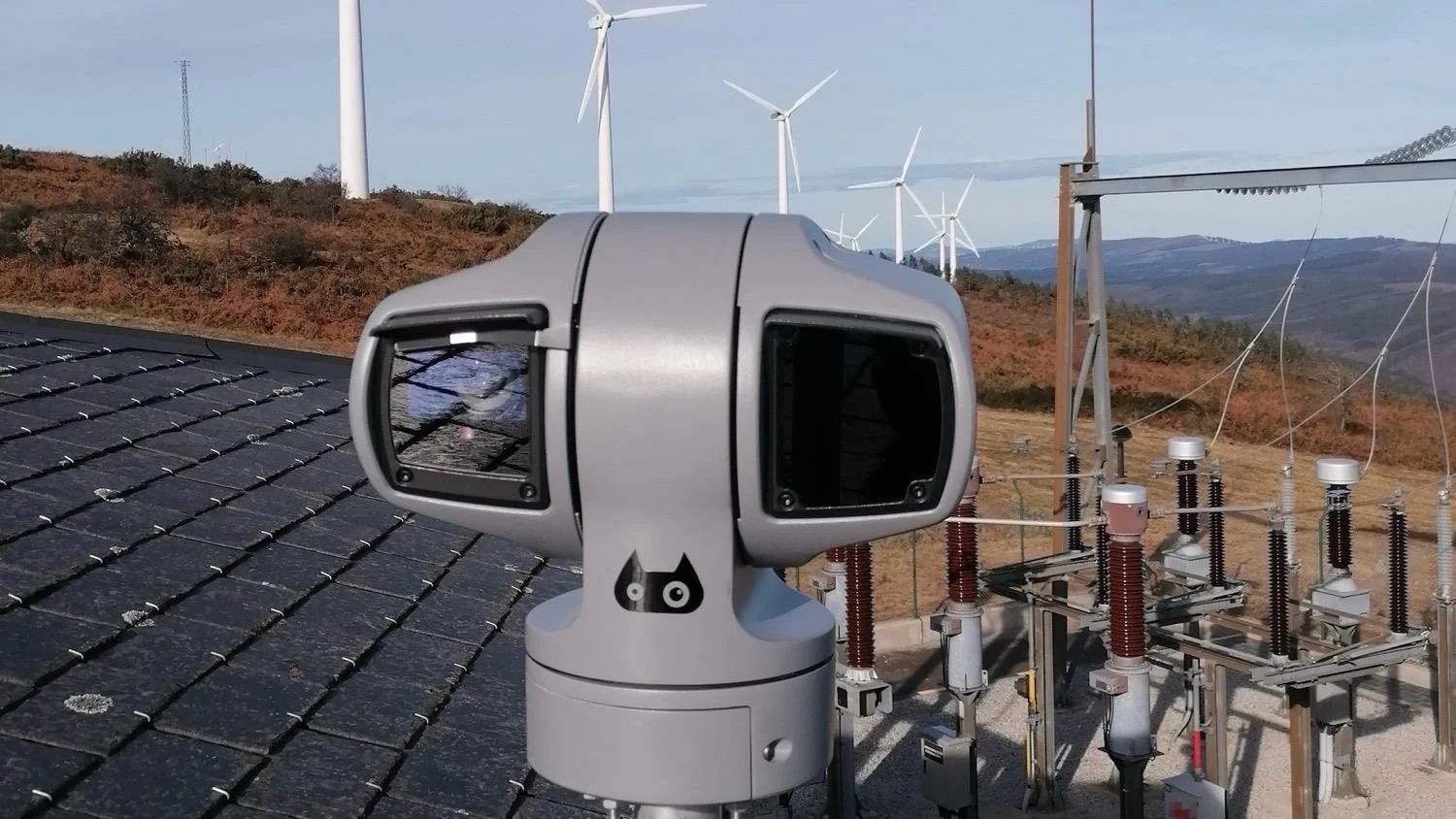
A deployment combines three things: wide-area cameras mounted on towers or high structures with a broad field of view; computer vision models trained to recognise the visual signature of smoke and fire; and an alerting pathway that gets a verified detection to the people who can act on it.
Why AI rather than a person watching a screen?
Continuous visual monitoring of many camera feeds is exactly the kind of task human attention performs badly at over long periods. Automated detection watches every frame consistently, and escalates only when something warrants a look.
The engineering that decides whether it works
The model is rarely the limiting factor. Coverage geometry is: camera positions, heights, sight lines and the terrain between them determine what can be seen at all. Then power, connectivity and the response procedure determine whether a detection turns into an action. These are site engineering questions, and they are where we focus.
Understanding site conditions first
Haze, rain, terrain, existing infrastructure and available connectivity all affect a realistic deployment. We assess these before proposing a configuration, rather than assuming a standard layout transfers to a given site.
Robotics Cats
Novico Engineering collaborates with Robotics Cats, a specialist in AI wildfire detection technology, to bring this capability to relevant sites in Malaysia. A pilot deployment has been conducted in Malaysia in collaboration with Robotics Cats. The sensible route for most organisations is a scoped pilot on a defined area before any wider rollout.
